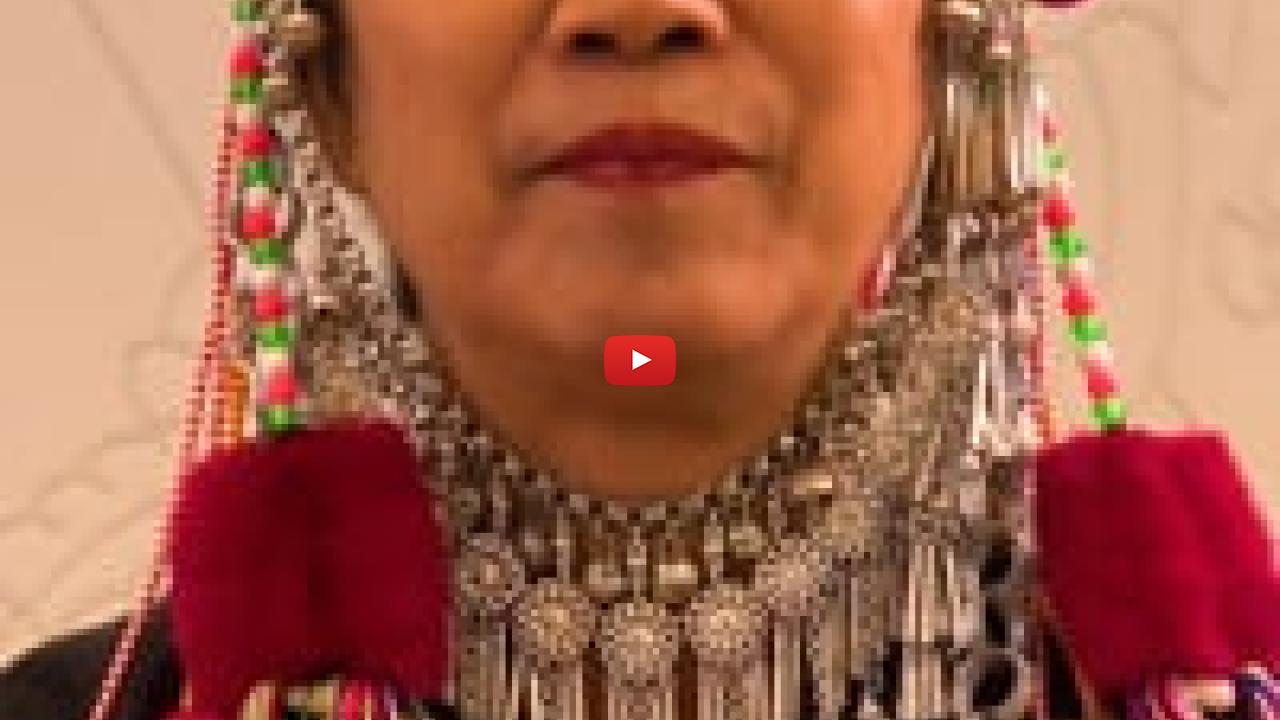
Cynthia Veliko, Regional Representative of UN Human Rights in South-East Asia, and Chutima Morlaeku, President of the Mekong Akha Network for Peace and Sustainability. © OHCHR/Chairat Chongvattanakij
Indigenous Peoples representatives acknowledge UN Human Rights’ role as Thailand marks first anniversary of key Act
“Nature ought to be dearer to us than our own lives,” said Chutima Morlaeku, President of the Mekong Akha Network for Peace and Sustainability.
Despite their environmental stewardship, Indigenous Peoples continue to be underrepresented in decision-making that affects their lands and livelihoods.
At a commemoration of the International Day of the World’s Indigenous Peoples held last month at the Thai Parliament, Indigenous Peoples representatives from Thailand and abroad met with civil society partners and government officials to discuss how international human rights standards, together with global commitments on climate change and biodiversity, can help governments strengthen policies that protect Indigenous knowledge, traditions, cultural heritage and ways of life.
“We must participate at the core of decision-making,” said Kriangkrai Chichuang, Chairperson of the Council of Indigenous Peoples in Thailand, citing past “plunders” where those with power and capital created extractive monopolies that devastated the environment.

Sakda Saenmi (left), Secretary-General of the Network of Indigenous Peoples in Thailand, and Kriangkrai Chichuang, Chairperson of the Council of Indigenous Peoples in Thailand.
© OHCHR/Chairat Chongvattanakij
“When the rights of Indigenous Peoples are respected, all of society benefits. Our shared future becomes more just, peaceful and secure,” said Cynthia Veliko, Regional Representative of UN Human Rights in South-East Asia.
In its coverage of the event, Thailand’s Indigenous Media Network, which was established by Indigenous Peoples representatives in 2013 to voice their perspectives, notes that UN Human Rights “was among those who played a role in supporting [the adoption of] the 2025 Act on Protection and Promotion of the Way of Life of Ethnic Groups.” Thailand marked the Act’s first anniversary on 19 September 2026.
The Act affirms the rights to equality and non-discrimination, prohibits hate speech and protects linguistic, cultural, educational, welfare and land-related rights within designated protected areas. The UN Human Rights Regional Office for South-East Asia provided a substantive contribution on the international human rights standards for consideration during the parliamentary review.
The Act is an extremely important first step; however, it falls short of recognizing Indigenous Peoples, which leaves a fundamental legal gap in relation to the need for protection, displacement and land rights. Thailand endorsed the United Nations Declaration on the Rights of Indigenous Peoples in 2007.
Asked about his hopes for the future, Sakda Saenmi, Secretary-General of the Network of Indigenous Peoples in Thailand, said, “We hope the Act will be a mechanism for cooperation between Indigenous Peoples and the Thai state. The state has the responsibility to promote Indigenous rights, and the existence of this Act compels it to take specific measures that align with the purpose of the Act.”

Commemoration of the International Day of the World’s Indigenous Peoples at the Thai Parliament.
© OHCHR/Chairat Chongvattanakij
The UN Human Rights Regional Office for South-East Asia will continue engaging with and supporting the Royal Thai Government to implement the Act, including by encouraging the full recognition of Indigenous Peoples and their rights, in line with international human rights standards.
Watch highlights from the commemoration of the International Day of the World’s Indigenous Peoples at the Thai Parliament, featuring Chutima Morlaeku, Sakda Saenmi and Kriangkrai Chichuang: